

I have interviewed Prime Minister Narendra Modi during a high-stakes campaign roadshow in Patna. I have sat across chief ministers and Union Ministers, some who wanted to answer, many who did not. In every single one of those encounters, the fundamental rule of the craft remained unchanged: ask the question, get the answer, and get out of the way.
It is that last part — the discipline of getting out of the way — that we urgently need to talk about.
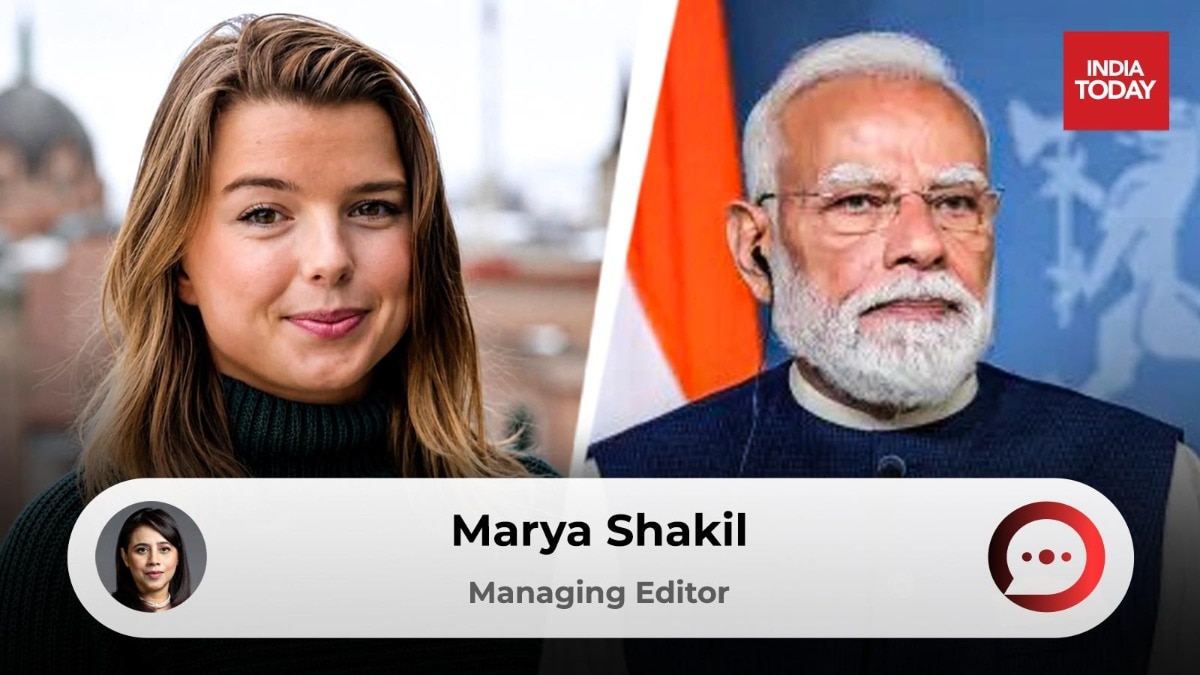
Recently, following a joint diplomatic press statement in Oslo alongside Norwegian PM Jonas Gahr Støre, Prime Minister Modi began walking off the stage. A local reporter, Helle Lyng, shouted across the room, “Prime Minister Modi, why don’t you take some questions from the freest press in the world?”
He kept walking. Her clip went viral. The internet’s applause was instantaneous.
Watching it, I felt a familiar, uneasy knot form. It wasn’t because her question was wrong. The right to demand answers from power is something I will defend without a second thought. My unease stemmed from the realisation that what we were watching wasn’t journalism. It was an opening act.
Here is the crucial context that gets entirely buried under the digital noise: that very same evening, at the official press briefing, she was given exactly what she claimed she wanted. She was invited into the room. She was given the microphone.
She stood up and delivered a multi-part volley, asking why Western nations should trust India given alleged human rights violations, and whether the Prime Minister would ever take critical questions. She had the floor.
Yet, the moment the MEA secretary began responding, she proceeded to interrupt and talk over the reply. It forced the secretary to pause and state plainly, “You ask a question, don’t ask me to answer in a particular way.”
That specific friction tells you everything you need to know about the state of modern media. The actual answer was never the objective. The objective was the confrontation, the carefully curated performance of asking, completely stripped of the professional discipline of listening. A reporter who deliberately drowns out the response she just demanded is not looking for accountability. She is looking for a scene.
She openly admitted on social media afterwards that she never expected Modi to answer her shouted query on the stage. She knew the protocol. She shouted anyway. What followed was the predictable modern lifecycle of viral media: the algorithmic explosion, the multi-part threads, and the defensive clarifications. With every subsequent post, the spotlight shifted. The narrative ceased to be about India’s complex press freedom landscape. It became entirely about her.
Anyone who has spent enough time in a newsroom recognises that specific arc. It isn’t the trajectory of institutional accountability. It is virality with a press card.
We need to state this plainly: journalists are increasingly choosing to become the story.
Sometimes power forces us into the headline through censorship or intimidation — that is a vital, separate battle. Increasingly, we are volunteering for the spotlight. The shout is engineered not to extract a policy position, but to produce a fifteen-second video asset. The asset produces a digital identity. Somewhere in that transaction, the viewer at home, the person who deserves a clear, uninterrupted answer, vanishes from the equation entirely.
When I managed to get questions in during a moving Modi roadshow, it wasn’t an accidental fluke. It was a structured work, where weeks of deep preparation met a fleeting, 4-minute opportunity to ask about political shifts and women voters. The camera remained focused on the leader. That is the job.
Furthermore, the deliberate conflation of a joint press statement with a press conference is doing an immense amount of dishonest heavy lifting in this debate. A joint statement is a rigid diplomatic format, with two heads of government appearing on protocol for the record. No leader, from any nation, routinely submits to shouted questions while walking off that specific stage. To label that standard diplomatic decorum as “suppression” is a fundamental distortion of how global state engagements work.
India’s position at 157 on the World Press Freedom Index is a sobering reality that demands serious, sustained, and deeply nuanced engagement. I work inside that reality every single day. My colleagues do too, reporting in Hindi, English, and a dozen regional languages, under conditions vastly more challenging and less comfortable than a secure hall in Oslo.
We do not need to be rescued by performative Western commentary. We certainly do not need our very real, everyday systemic challenges reduced to someone else’s fleeting, viral moment.
The journalist is not the story. I didn’t learn that from a university textbook; I learned it through years of fieldwork, sitting across powerful figures who had no intention of giving up ground easily.
The exact moment the confrontation becomes more important than the answer, you have stopped practising journalism. She got the room. She got the microphone. She got her answer, and she chose to talk over it. That isn’t press freedom.
Source: India Today