

Norway is not only famous for fjords and fish but also for an annual tradition of telling the rest of the world it is doing everything wrong. It is called the World Press Freedom Index. India fares miserably on that list. It ranks between Palestine and Venezuela, one occupied and the other semi-occupied country. India’s other neighbours are Pakistan, and Bangladesh because well, let’s say, brown birds flock absurd. Also Turkiye, where Erdogan arrests editors for fun.
India is at No. 157. Norway, naturally, is at Lumber One. Norwegian Lakdi. Which means Norway is very free. Freer than anywhere. Freer, perhaps, than is entirely useful. You can’t blame a Norwegian for not being very warm to India because their country is cold as hell. Enter the bold and blonde, Helle Lyng. Miss Lyng is an opionionator at a publication that most Norwegians have never read, covering a country they will never visit, at a joint briefing that was, technically, not a press conference.
This distinction matters. A joint media briefing by two heads of state is not a press conference. It is a photo opportunity and a press kit for everyone. It is for diplomatic theatre, not adversarial journalism. Every journalist, in every country, knows this. Except, apparently, Helle Lyng, who decided that this was the moment to shout at Narendra Modi about the Press Freedom Index. Modi did not answer. He left the room. This is the correct thing to do when someone shouts at you at a photo op.
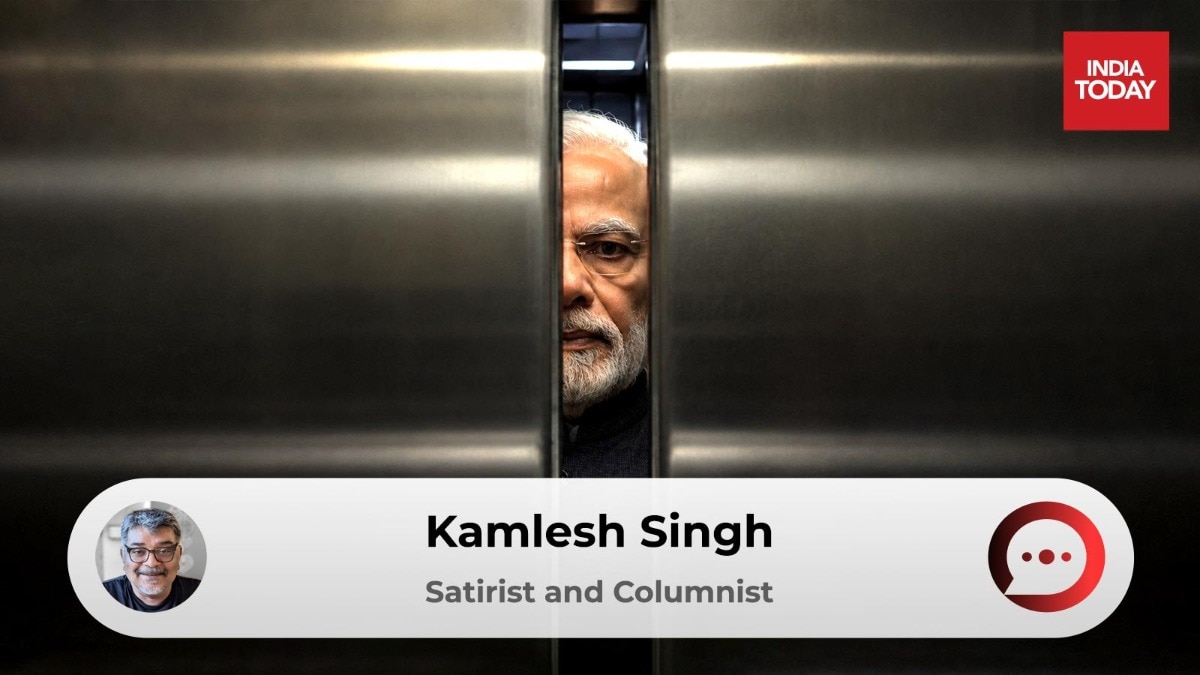
But Helle was not done. She followed him. To the elevator. Then she went home and tweeted about it. “Narendra Modi would not take my question,” she wrote. “Norway has the number one spot on the World Press Freedom Index, India is at 157th, competing with Palestine, Emirates & Cuba. It is our job to question the powers we cooperate with.”
This sentence contains a fascinating assumption. The assumption is that Norway cooperating with India is a moral failing that requires journalistic or Hellenistic intervention. Norway, it should be noted, was at this very moment signing deals with India. The Norwegian government had invited PM Modi. The Norwegian King had presumably shaken his hand. Norway was, in the conventional sense, quite happy to trust India. Norway’s government had decided, after the usual deliberations of democratic governance, that India was a fine country to do business with. But Helle had questions. Helle Yeah!
The Indian Embassy, in a moment of great confidence and considerable misjudgement, decided to invite her to an actual press briefing. Dear Ms Lyng, they said, please come and ask your questions. They tagged her personally on Twitter, now called X because it has become the X factor in international diplomacy these days. The invitation was sporting of them. In hindsight, it may not have been wise. She came. She asked why “should we trust India”. She walked out. She came back.
The Indian Embassy’s response to this was MEA Secretary Sibi George, who proceeded to deliver a lecture of quite extraordinary range. He covered India’s civilisation. He covered chess. He covered yoga and performed some verbal gymnastic aur prachin gaurav aasanas, as we call it in Sanskrit. He covered Covid vaccine diplomacy. He mentioned 200 TV channels in Delhi alone or something like that. He said critics of India were reading reports from “godforsaken, ignorant NGOs”. He said women in India got voting rights in 1947, before many countries that are not worth naming.
What Sibi George did not say, and what nobody in that room apparently thought to say, is this: why are you asking us? Ask your own government. Ask the Norwegian foreign ministry why they invited Mr Modi. Ask the Norwegian prime minister why he was standing next to him at a joint briefing if India cannot be trusted. Ask the Norwegian king why he received a man whose country, by your own reckoning, sits at 157 on the Press Freedom Index. Ask the Norwegian parliament whether it debated these deals before approving them. The Indian Embassy invited a hostile journalist to a press briefing, then responded to hostile questions with a TED talk on the Saraswati River Civilisation. This is not diplomacy. This is what happens when the Ministry of External Affairs mistakes a press conference for a school project on ancient India.
Meanwhile, on X, depending on which side of the divide one was, the Indian internet was busy hailing Helle, Oye Helle Meri, or calling her a foreign plant, a spy, an agent of, you guessed it, George Soros. Her account had been verified just days before the Modi event. Her last tweet before Monday was in April 2024, about cocaine addiction among Norwegian youth. Before that, 2022. Before that, relative silence. This silence became evidence. The blue tick became suspicious. The cocaine article became context. Helle clarified. She was more active on TikTok and Instagram, she said. She verified her account because she had a typo she wanted to edit. She had to pay for the verification. She got a blue check mark. These are, frankly, the least conspiratorial circumstances imaginable for obtaining a blue mark on X, but the internet was not in a mood for proportionality. It never is. The result: She had 800 followers before Monday. She has 17,000 now.
The Indian internet, in its determination to expose her, has made her famous. This is a recurring pattern that we have yet to learn from. Rahul Gandhi, predictably, shared her post. “What happens to India’s image,” he asked, “when the world sees a compromised PM panic and run from a few questions?” This would carry more weight if the Leader of Opposition could specify which press conference, in any democracy, the PM is obligated to answer shouted questions at a joint media briefing with a foreign head of state.
The answer, for the record, is none. The real scandal here is not that PM Modi did not answer a Norwegian journalist he did not hear at a photo opportunity. The real scandal is that India’s diplomatic apparatus, given a perfectly ordinary provocation, chose to respond not with a single sharp sentence but with a civilisational lecture, and in doing so managed to look both thin-skinned and long-winded simultaneously.
Helle Lyng chased the Prime Minister to the elevator. She got 16,000 new followers and a future mention in India’s parliament. Sibi George defended India’s honour with references to chess and yoga.
Norway remains at number one on the Press Freedom Index.
India remains at 157.
This would be a perfectly comfortable place to stop, except that comfort, in this case, would be dishonest.
Because here is the thing about a Prime Minister who does not answer questions at a joint briefing. He does not answer questions anywhere. Not at home. Not abroad. Not at press conferences, because there have been no press conferences. Not at briefings, because briefings are for spokesmen. Narendra Modi has been the Prime Minister of India since 2014. He governs 1.4 billion people and has never once stood in a room and said: AMA.
So when Sibi George said India has 200 television channels in Delhi alone, he was not wrong. India has television channels the way Norway has fjords. What these channels do not have is a Prime Minister willing to sit across from a journalist and answer an unscripted question. The channels exist. The questions do not get asked. This is a peculiar definition of a free press, but it is the one we have been working with for 11 years.
157. She was not inventing a number. She was quoting one. That the Index itself is mysteriously produced. But the number is real. The silence behind it is real.
What she was wrong about was the theatre. A joint media briefing is not the place. Chasing a head of state to an elevator is not journalism. It is content. It performed well on X.
And somewhere, in the deep slumber of a subconscious that had not stirred in nearly three decades, a Cornershop song woke up.
Jad main jaagiyan, main kalla si. Ve chidi bhaag gayi.
When I woke up, I was alone. The bird had flown.
The bird was not Norwegian lakdi: wooden, inert, something you could at least make furniture from. She was Norwegian ladki.
Pher main agg jugai.
Then I lit a fire.
Except nobody lit a particularly useful fire. The Embassy lit a fire by inviting her. Sibi George lit a fire by invoking godforsaken NGOs on international television. The Indian internet lit several fires by turning an obscure Norwegian commentator into a globally recognisable face of press freedom. Rahul Gandhi warmed his hands at all of them. And the Prime Minister, who started all of this simply by refusing to speak, said nothing. As he has always said nothing. As he will, in all likelihood, continue to say nothing.
Hai nee ae achchhi. Norwegian Ladki.
Is this good, then? No(r)way.
Ae vee achchhi nahin si. Not the photobombing at a photo op. Not the civilisational lecture. Not the trolling. Not the elevator. Not the 11 years of unasked questions in a democracy that is very proud of its Constitution and its women’s voting rights and its 200 television channels who have to depend on sources to know about his Mann Ki Baat.
The elevator remained, throughout, unavailable for comment.
So did the Prime Minister.
Source: India Today