


If you’ve stepped outside anywhere in North India this week, you already know the numbers don’t do justice to the misery.
Uttar Pradesh’s Banda district hit a staggering 48°C on Wednesday, May 20, the hottest spot in the entire country. Delhi has been flirting with 44–45°C, with the India Meteorological Department (IMD) placing the capital under repeated heatwave alerts.
Rajasthan, Punjab, Haryana, and Himachal Pradesh are all baking under the same relentless Sun, driven by dry, hot winds blowing in from the deserts of the northwest.

This is what a North Indian summer at its worst looks like, and it has arrived with particular ferocity in 2026.
The question that most are asking is when will monsoon arrive and send the heat packing?
The IMD has forecast that India’s southwest monsoon, which is the seasonal rain system that delivers nearly 70% of the country’s annual rainfall, is likely to arrive over the Kerala coast around May 26, nearly a week ahead of its usual date of June 1.
That makes this an early monsoon year, and for millions of Indians sweltering through the heat, that is very welcome news.
Once the monsoon touches down in Kerala, it takes several more weeks to reach the rest of the country. Maharashtra and Mumbai are expected to see monsoon rains around June 2–5.
The monsoon will then soon journey northward, bringing cooler winds, raindrops and relief, to North India currently being baked.
Delhi and most of North India, which are suffering the most right now, will have to wait until around the last week of June, roughly June 27, which is actually the normal, on-time arrival window for the capital.
An early monsoon onset in Kerala does not automatically mean faster or heavier rains everywhere. Weather experts caution that once the monsoon makes landfall in the south, its northward march can slow or stall depending on wind patterns and atmospheric pressure over the Bay of Bengal and Arabian Sea.
There’s another caveat.
Both the IMD and private forecaster Skymet Weather have warned that the 2026 monsoon season overall may deliver below-normal rainfall.
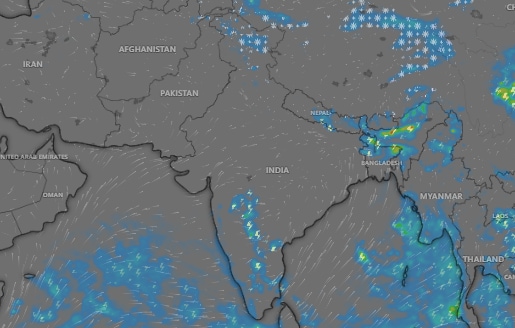
The IMD estimates seasonal rainfall at around 92% of the long-period average, while Skymet pegs it at 94%. Both agencies point to the likely development of El Nino conditions, which is a warming of Pacific Ocean temperatures that historically tends to weaken India’s monsoon. The growing likelihood of El Nino points to its arrival as the season progresses into July and August.
In other words, this means that while the rains may begin on time or even early, it’s not a safe bet to assume that the showers will carry through for a long period. Although uncertainty remains, the coming months will be watched closely.
For now though, after weeks of historic heat, even the promise of rain feels like relief.
Source: India Today