

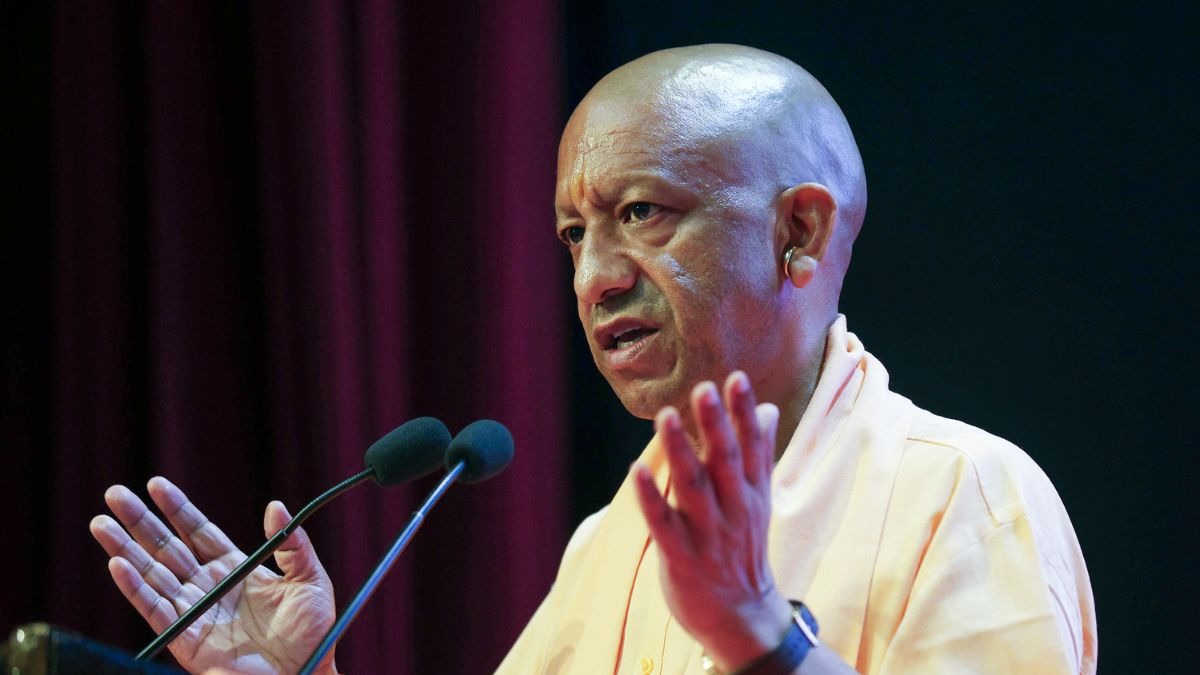
 Uttar Pradesh politics has once again centre-staged the debate over offering namaz on roads after chief minister Yogi Adityanath reiterated that public roads cannot be used for the practice.
At an event in Lucknow recently, Adityanath stood by the position he had taken earlier, stressing that public roads cannot be used for such religious gatherings and that, in the absence of adequate space inside mosques, namaz be offered there in shifts.
“People ask whether namaz is really not offered on roads in Uttar Pradesh? I say, absolutely not. Go and see, it does not happen. Roads are meant for movement. What right does anyone have to block roads and obstruct movement? Offer prayers at the designated place,” Adityanath said.
“They (Muslims) ask how it will work as their numbers are big? We said, do it in shifts. If there is no space at home, then control the numbers If you want to live within the system, then start following the rules and the law. If you want to offer namaz, do it in shifts. We will not stop you, but not on roads,” he said, adding that the administration would not allow roads to be obstructed.
The chief minister warned that people should abide by the guideline peacefully. “If they agree through dialogue, fine Otherwise, they may see conflict. People in Bareilly tried to test the system and saw the strength of the government. The government wants to connect the entire system with proper order,” he said.
Adityanath’s remarks triggered an immediate political response. Samajwadi Party president Akhilesh Yadav accused the BJP of raking up the issue to divert attention from governance problems. “India is equal for everyone. The Constitution is equal for everyone. Even today, we are sitting on the road. The government is holding every event on roads because there is no other arrangement made by them. Where is the [promised] Smart City? Traffic crawls in Lucknow. The BJP simply wants us to engage in other debates,” said Akhilesh while addressing the media during a community food event in Lucknow.
While the Samajwadi Party maintains that such debates are meant to skirt accountability on unemployment, inflation and civic problems, the BJP projects roadside namaz as linked to law and order and public discipline.
The controversy is old. Adityanath had made similar remarks last year as well, triggering sharp exchanges with the Opposition. However, the timing of the remarks now has drawn attention. The BJP is electorally in a commanding space after strong victories in party-ruled Assam and West Bengal, where it has formed a government for the first time. In both states, identity politics and Hindutva were aspects of the election campaign narrative.
In Uttar Pradesh, the BJP has historically found strong traction through a combination of welfare, governance and Hindutva politics. Political observers believe the latest remarks are part of that broader strategy, especially as the state will vote in assembly elections within a year.
State elections will also be held next year in BJP-ruled Uttarakhand, Manipur and Goa, besides Punjab. A BJP returning to these themes to consolidate its core support base should not be seen as unexpected. The party’s messaging in recent years has often blended development with emotive cultural and religious issues.
However, critics of the Uttar Pradesh government’s stance on namaz point to the same BJP administration making extensive arrangements every year for the Kanwar yatra, including traffic diversions, security deployment and dedicated facilities for pilgrims. That contrast has become part of the Opposition’s criticism. This is not the first time such messaging has appeared before a major election, so many see the latest debate as part of a familiar political template.
Subscribe to India Today Magazine
Source: India Today