

How to spot AI writing? You cannot, not with AI checkers and not with your eyes
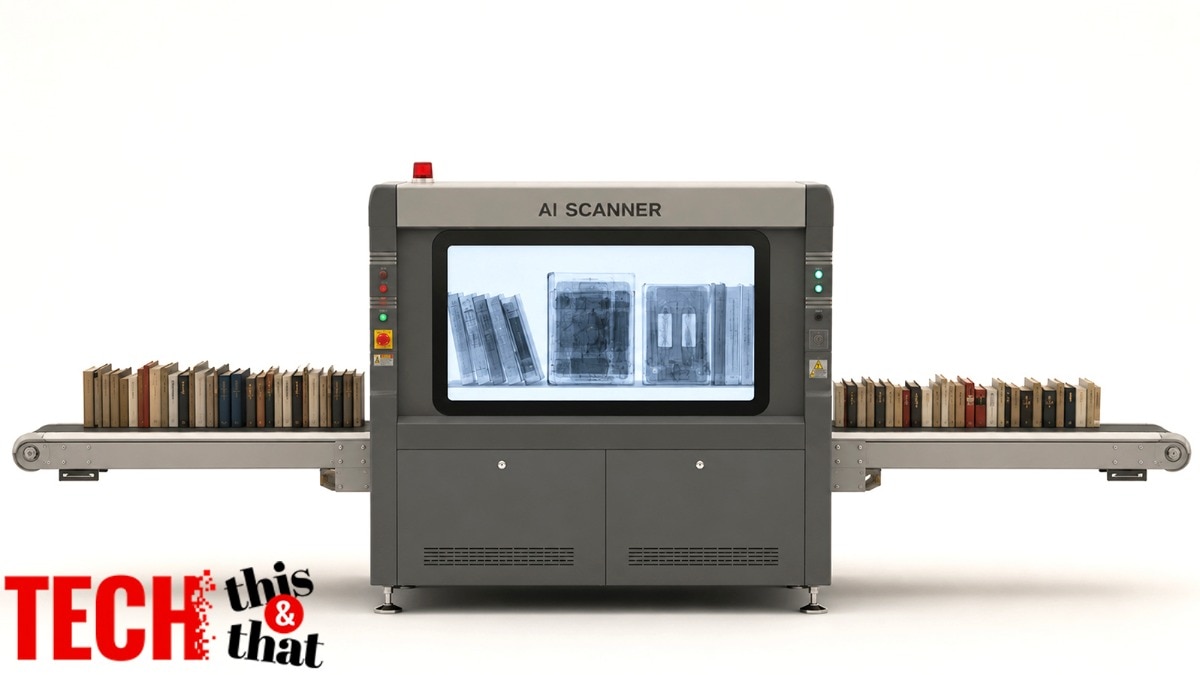
You don’t need to be Italo Calvino, who once talked of The Literature Machine, to predict that one day this moment would arrive. That writing done fully or partially by AI would start appearing in places where you don’t expect it to appear. Now it has and the last few days are the prime example of the ripples it has created. If you go to social media, and by that I mean X aka Twitter, you will likely come across a raging debate on the ethics and practicality of AI writing. And by raging I imply a debate that is viciously scorching anyone touched by it, in the manner social media debates tend to do.
What’s the brouhaha? It’s about three pieces of writing: a short story, a full book, and a blog piece.
The short story — The Serpent in the Grove — is by Jamir Nazir, a Trinidad-based writer. It won the regional prize in Commonwealth Short Story Competition and has now been published in Granta, the grand literary magazine that has been a self-professed curator of the definitive literary taste for over a century.
The book — The Girls Are Not Fine — is by Harnidh Kaur. A non-fiction title, it has been published by Penguin. The blog piece, which went viral with thousands of retweets and hundreds of comments from readers who deeply felt it pull at their heartstrings, was published on Times of India Blogs. It talks of friendship among adults and the demands it makes on us.
All three have been accused of AI work. There are countless tweets and posts, including on Reddit, where people are combing through the words contained in these pieces. They are finding patterns hidden in words, patterns that probably their writers don’t know. The internet sleuths are looking for a combination of words and phrases, peculiar punctuations, that “prove” these works as output of AI. The judgments are coming thick and fast, the pitchforks and torches are out, and the names attached to the short story, the book, the blog post have been bloodied and singed.
The entire brouhaha does bring up a couple of questions. One, is it really possible to identify and mark which is AI writing and which is not? And two, does it even matter?
The answer to the first question is simple: definitely no. Anyone, or any tool, claiming that it is possible to identify AI writing is selling snake oil to you. Not this tool, not that tool, not even Pangram, which seems to be the darling of anti-AI writing sleuths, can identify and mark AI writing from work produced by humans. There is a joke from the early days of ChatGPT. Someone fed an AI checker the first page of the Bible. The AI checker deemed it written by AI with some 70 or 80 per cent confidence. Hence proven, God is AI. Haha!
Jokes aside, this is the state of AI checkers in 2026. At the time when AI tools have become exceptional, relative to the language skills of most of us, it is impossible for any AI checker, whatever maths and algorithms it uses to find a pattern within words and structure, to identify AI writing. Instead, these tools are feeding the biases of people. They are spitting out random, vibe-based results. Just like AI writing tools, the AI writing checkers too are understanding and analysing words according to the laws of large language models. And they are as subtle or accurate as ChatGPT, which is to say not all that much.
Around a week ago I wrote a piece on AI slop. In that piece I rhetorically asked if the article you were reading was written by AI. Then I wrote, “I am not going to answer because it doesn’t matter. You will, anyway, not believe it. Such is the world nowadays.”
Indeed, such is the world nowadays and what we have seen happening in the last few days proves it. People will now believe whatever they want to believe. Some people will run a Granta story through an AI checker and believe that it has been written by AI. Some people will choose not to.
This is not to say that the Granta story has not been written by AI. All I am saying is that it is impossible for anyone to prove or disapprove the claim.
The chatter around the telltale signs of AI writing is hogwash. The em dash — despite the love it gets from AI — is not a sign of AI writing. It is not XYZ but ABC – this too is not a sign of AI writing. Everything that AI loves to put in its writing, is also loved by a lot of human writers. There is a reason why AI tools like ChatGPT and Anthropic use the words the way they do. They have learned the patterns, have memorised the writing styles, from the best human writers. AI writes like how humans write. And because it has become extremely good at this imitation, it is impossible to tell AI writing apart from whatever a human has written.
You cannot do it through an AI checker. Or even through your eyes. But there is a way. And that way is taste. Just like I wrote last week, AI is good at imitation games. But it is not capable of creating writing, or a piece of art, that has meaning in it. Or a piece that has good taste infused in it.
Meaning and taste is something you cannot verify with AI checkers. You cannot even verify it with your eyes. Instead, you have to sense and experience it. Although, this brings up the question – how many of us really know good taste when we see some. Just like common sense, taste too is not all that common. Putting words together correctly and precisely does not give them meaning. The meaning comes from what the writing makes you feel and how strongly, from the very personal human experiences that form the backdrop for the writer as well as the reader. An epic like Paradise Lost does not rely on the eyes of readers to make sense. It is a sensory experience. That is why Milton, blind and ailing, could sing it aloud to his daughter who wrote it down.
In a world full of AI writing, this sensory experience will become the arbiter of good writing. But until that happens we will continue to run into raging debates on AI writing, the meaning of art and literature, and the ethics of how much AI is good use of AI and when it turns toxic for people who dare to write in the era of ChatGPT and Claude. Get ready for it.
Source: India Today