

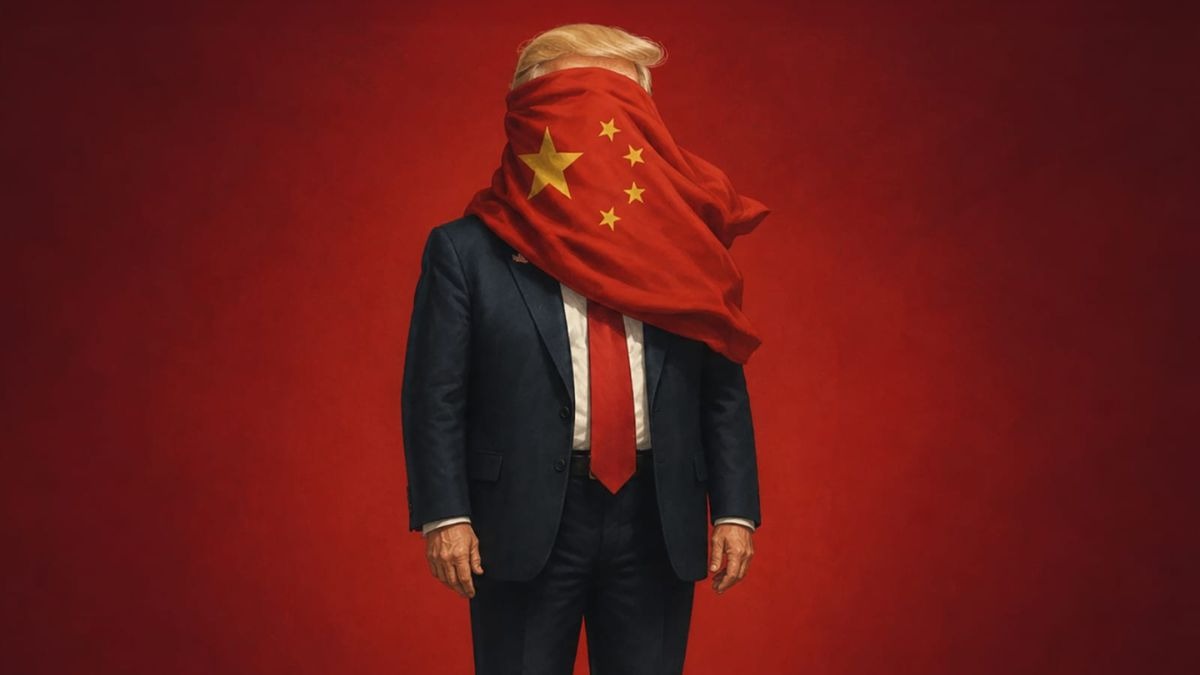
 US president Donald Trump arrived in China on May 13 expecting spectacle. What he got instead was silence.
No grand reception. No red-carpet moment with president Xi Jinping waiting at the foot of the stairs. Instead, Trump was greeted by mid-level officials and rows of schoolchildren waving Chinese flags for the cameras.
Beijing’s message was unmistakable: this was not a state visit being treated as historic. It was being handled like routine diplomatic traffic.
And it got worse from there. Chinese state media barely acknowledged Trump’s arrival. Newspaper front pages focused on China’s relationship with Tajikistan and regional economic partnerships. Trump, who thrives on symbolism and public displays of power, suddenly found himself stripped of both.
Even more striking was Trump’s own silence. After days of hyping his meeting with Xi, he went quiet for nearly 16 hours after landing in Beijing. No triumphant posts. No declarations of victory. No boasts from Air Force One. Just silence.
Behind the scenes, Beijing appeared to move in the opposite direction of Washington’s demands. Reports emerging from Chinese and regional media suggest Chinese firms are now deepening discussions over potential arms and energy arrangements with Iran, despite earlier American pressure aimed at limiting cooperation between the two countries.
Iranian officials, meanwhile, have reportedly expanded transit permissions for Chinese oil tankers moving through the Strait of Hormuz, effectively reducing any leverage Washington hoped to gain during the summit.
The timing is difficult to ignore. Trump arrived hoping to project dominance over both China and Iran. Instead, the regional powers appeared to coordinate around him, not with him.
Then came vice-president J.D. Vance. Asked about Trump’s recent comments suggesting Americans should not focus on short-term financial pain, Vance attempted to walk the statement back in real time. He insisted Trump’s words had been “misrepresented” even as the clip continued circulating widely online.
The damage control only reinforced the growing impression inside Trump’s orbit: allies are increasingly being forced to reinterpret his remarks almost immediately after he makes them.
Speaker of the US House of Representatives Mike Johnson offered a similarly careful clean-up operation, pivoting the conversation towards energy markets and the Strait of Hormuz rather than defending Trump’s original comments directly.
Taken together, the optics have been brutal for the White House. While Trump received a muted welcome, top Chinese officials were simultaneously engaging with BRICS partners and regional allies elsewhere, signalling where Beijing’s strategic priorities now lie.
For a president who measures success through displays of respect, ceremony and dominance, the images from China told a different story entirely. Trump arrived expecting to look like the centre of the geopolitical chessboard. Instead, he looked like a player discovering the board had already moved without him.
Subscribe to India Today Magazine
Source: India Today