


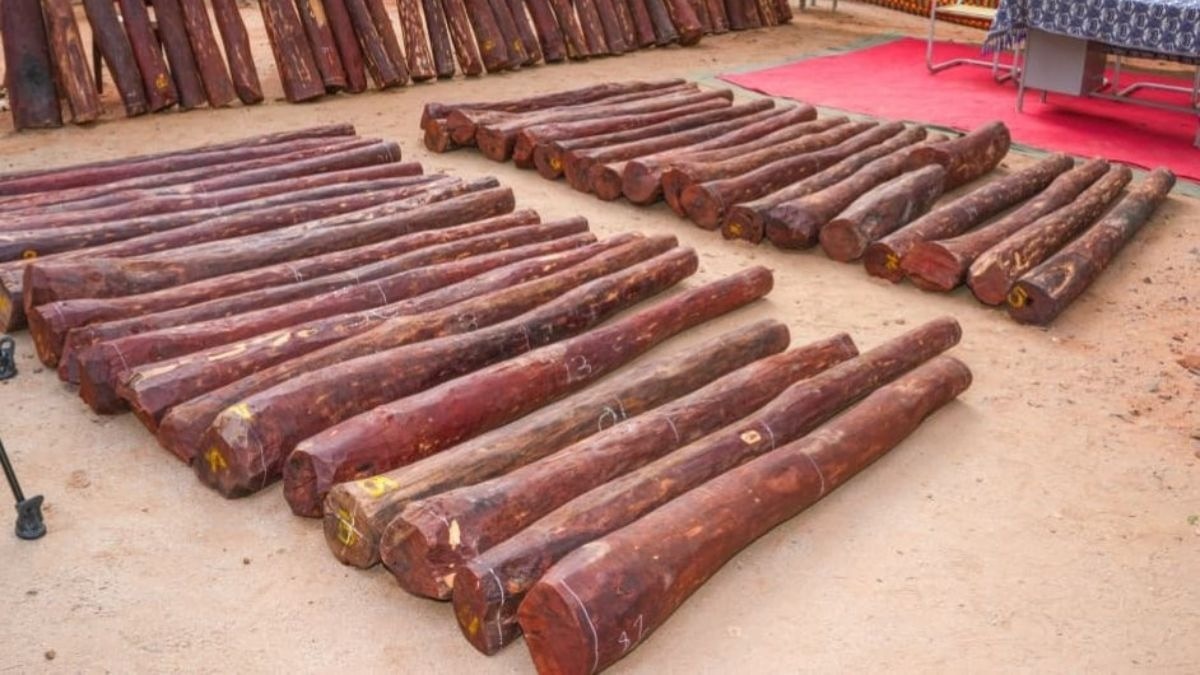
 Pushpa and his gang, in the popular movie franchise, were chopping away Red Sanders (Pterocarpus santalinus) trees, depriving the Seshachalam forests in Andhra Pradesh of precious green cover. Not very long ago, reel felt real to a large extent.
The illegal felling of Red Sanders, endemic to the forested hills surrounding the Tirupati Balaji Temple, and smuggling of wood to countries like China, had been a big challenge for the state’s forest department and police for years. But thanks to the efforts of the Tirumala Tirupati Devasthanams (TTD), the body managing the revered Lord Venkateshwara shrine, the temple town and contiguous hills are now estimated to be 90 per cent green.
The TTD’s forest department oversees a total forested area of 2,719 hectares (about 6,720 acres). According to the latest India State of Forest Report, 89.4 per cent of this cover is recorded under TTD limits, placing it among the leading institutions in the country in terms of managing greenery.
Nearly 2,431 hectares are under forest vegetation, significantly contributing to carbon storage, climate regulation and biodiversity conservation, say TTD officials, explaining that the forest department has been protecting the rich forest wealth of Seshachalam Hills since 1980, “maintaining ecological balance while catering to the spiritual needs of millions of devotees”.
The department functions under the supervision of a deputy conservator of forests. There are four forest ranges in all— two in Tirumala and two in Tirupati—each headed by a forest range officer. At the field level, deputy range officers, forest section officers and support staff coordinate on forest protection activities, including round-the-clock patrolling to curb tree felling and poaching. To prevent forest fires, fire lines are maintained and trained teams put in place to respond swiftly.
As part biodiversity conservation, TTD has undertaken an initiative to replace acacia with native vegetation. Under this, Peepal, Banyan, Cluster Fig, Indian Medlar, Champak, Mango, Sandalwood, Red Sanders, Gooseberry and Jamun saplings are being planted in phases across 576 hectares. So far, the drive has covered 22 hectares.
Special nurseries are maintained in all four forest ranges to raise native species, ornamental plants and medicinal plants. These supply quality saplings required for the forest restoration programmes.
Andhra chief minister N. Chandrababu Naidu has lauded the TTD’s achievements, saying: “Our traditions regard nature as sacred, and protecting forests and wildlife is a service to the divine. I appreciate these efforts, which will help preserve a greener and healthier Tirumala for future generations.”
The forests of Seshachalam are also home to numerous wildlife, including elephants, leopards, bears and snakes, which requires special measures to reduce human-wildlife conflict and rescue injured animals. Frequent sightings of leopards and sometimes bears had become a frightening aspect of the 11-km-long trek to the hill shrine of Tirumala from Tirupati town.
Such was the scare three years ago, following two leopard attacks on children in which a six-year-old girl was killed, that the TTD started handing batons to help devotees stave off animal attacks while walking through the hilly, forested terrain. To ensure the safety of devotees, three snake rescue teams are deployed at Tirumala. The forest department also identifies and trims/clears dangerous trees along the route. Conflict mitigation programmes are being executed in collaboration with the Wildlife Institute of India.
The forest department also supplies sandalwood logs, firewood, Darbha grass and other materials required for the temple rituals. It maintains road medians and gardens, and runs greenery development programmes in Tirumala and Tirupati.
Officials say special focus is being laid on the conservation of rare and medicinal plants and supply of raw materials for ayurveda. Helping this cause are projects such as Pavitra Vanam, Divya Oushadha Vanam and Palamaneru Timber Plantation. “Our objective is to preserve the sacred forest wealth and pass this invaluable natural heritage to future generations,” said a senior TTD official.
Subscribe to India Today Magazine
Source: India Today