

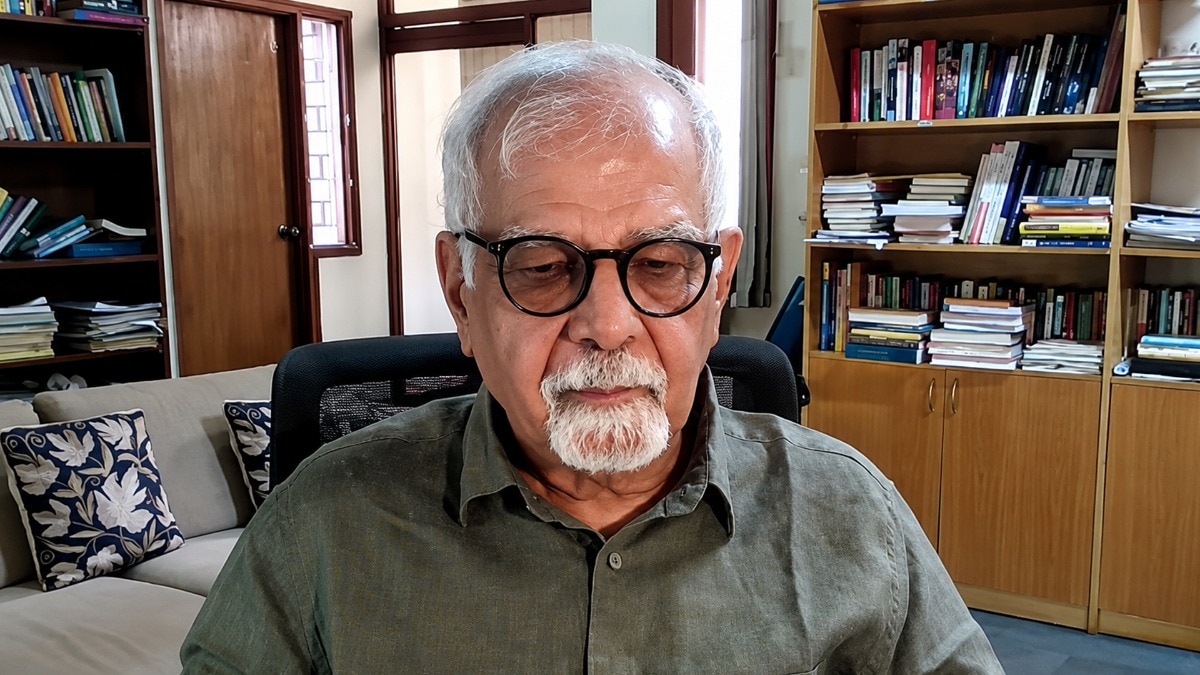
The BJP’s repeated election victories may have lulled the government into an economic comfort zone, reducing the urgency for difficult reforms despite warning signs in private investment and foreign capital inflows, economist Surjit Bhalla said in a sharp critique of India’s economic trajectory under the PM Narendra Modi government.
Bhalla, a former executive director for India at the IMF and former member of the Prime Minister’s Economic Advisory Council, argued that the ruling party’s continued political dominance and the weakness of the opposition may have created a sense of policy complacency within the government.
Speaking to India Today, Bhalla said the BJP deserved credit for political stability and repeated electoral success, but warned that stability alone would not make India a developed economy by 2047.
“Maybe the fact that the BJP is winning practically every election and is popular with the people has lulled them into a comfort zone,” Bhalla said. “They don’t believe or think they have to do anything for the economy because who else are the people going to vote for?”
He argued that difficult reforms such as farm laws, land reforms and trade liberalisation have either slowed or been abandoned despite being advocated by the government earlier.
Bhalla’s remarks come at a time when the Indian economy faces multiple pressures, including soaring crude oil prices, disruptions in fertiliser and petroleum supply chains due to the ongoing West Asia conflict and a sharp weakening of the rupee, which recently touched a lifetime low of 96.36 against the US dollar.
In a recent column that sparked widespread debate, Bhalla argued that while the BJP may be “winning elections”, it is simultaneously “losing the economy”.
Bhalla questioned India’s claim of being the “fastest-growing major economy,” saying it is factually incorrect and unhelpful, and noted that in US dollar per capita GDP growth India trails countries like Bangladesh and Ethiopia.
According to Bhalla, the central problem lies not in public investment, which has grown significantly through infrastructure spending, but in the collapse of private investment since 2014.
“Total investment has remained around 32 per cent of GDP, but public investment has risen by five to six percentage points while private investment has fallen by the same amount,” he said. “Infrastructure has worked well, but private investment has not worked at all well.”
Bhalla blamed much of the decline in foreign investment on changes introduced in India’s Bilateral Investment Treaty (BIT) framework in 2015, which imposed stricter conditions on foreign investors, including lengthy “cooling-off” periods and mandatory reliance on Indian legal remedies before international arbitration.
He argued that the policy shift made India a less attractive investment destination compared to countries such as Vietnam and Mexico.
“Foreign investors vote with their feet,” Bhalla said. “We think India is such a large market that investors will come anyway. The reality is we are not that attractive and people are not desperate to enter the Indian market.”
During the interview, India Today TV’s Marya Shakil asked Surjit Bhalla what “surgical reforms” he would prioritise, particularly in the context of the ongoing West Asia crisis, Bhalla called for a rollback to the pre-2015 Bilateral Investment Treaty (BIT) framework, lower taxes for foreign investors, greater policy predictability and a permanent end to retrospective taxation.
He also criticised what he described as a growing tendency toward “band-aid solutions” rather than structural reforms.
Bhalla further questioned why politically difficult reforms, such as land acquisition changes, farm law reforms and deeper trade liberalisation, had stalled despite the BJP enjoying a strong electoral mandate.
“The BJP has earned its dominance democratically and should be proud of it,” he said. “But perhaps that very dominance has also made everyone comfortable enough not to rock the boat.”
Source: India Today